
Mineral Deposits on Windows in Florida: What Causes Them and How to Remove Them
Mineral deposits on windows in Florida are one of the most common problems homeowners and businesses face across Florida. If your glass looks cloudy, spotted, or streaked even after cleaning, there’s a good chance you’re dealing with mineral buildup rather than ordinary dirt.
These deposits form when mineral-rich water repeatedly dries on glass surfaces, leaving behind residue that bonds to the window over time. In Southwest Florida communities like Naples, Fort Myers, Bonita Springs, and Estero, mineral deposits often come from irrigation systems, rainwater runoff, and coastal environmental conditions.
At Clear Quality Window Cleaning, Aiden and his team regularly help homeowners identify whether mineral deposits on windows in Florida can be safely removed or if the glass has begun to experience deeper damage from long-term buildup.
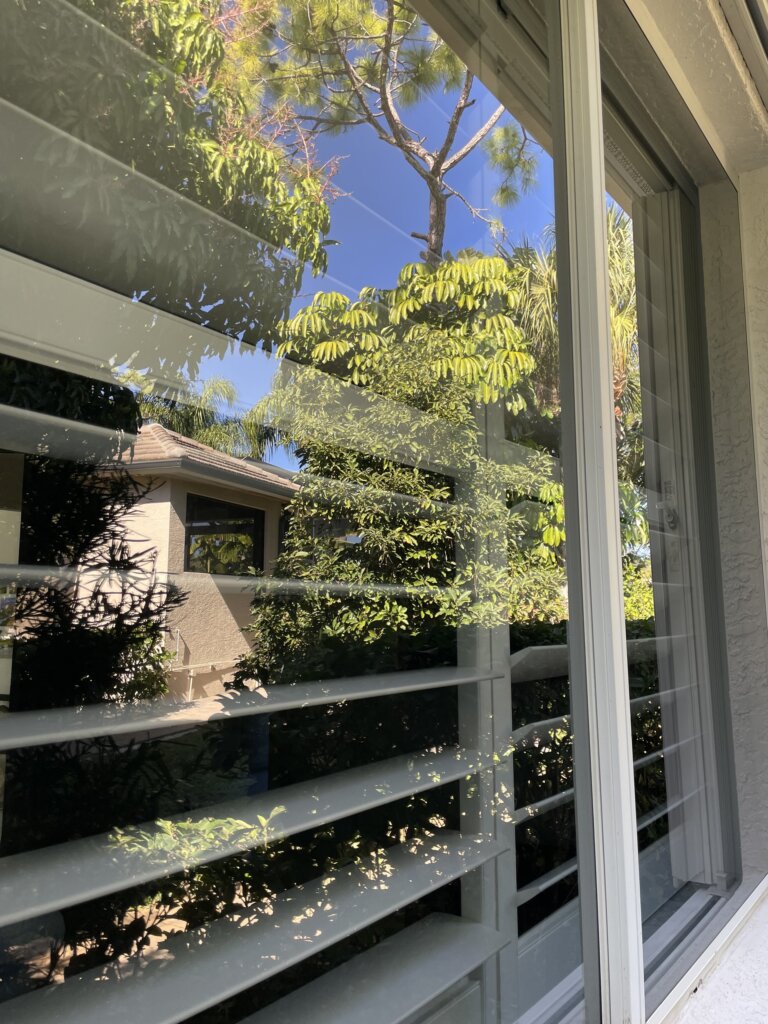
What Are Mineral Deposits on Windows?
Mineral deposits occur when water containing dissolved minerals—primarily calcium and magnesium—evaporates and leaves solid residue on glass.
Over time, these minerals accumulate and create visible spotting or haze that standard cleaning methods cannot remove.
Common signs of mineral deposits on windows include:
- White or chalky spots on glass
- Cloudy or hazy window appearance
- Streaks that return after cleaning
- Rough texture on the glass surface
- Spots concentrated near sprinkler spray areas
Unlike dust or dirt, mineral deposits on windows in Florida chemically bond to the glass surface, which is why they often require professional treatment.
What Causes Mineral Deposits on Windows in Florida?
Florida’s environment makes mineral buildup especially common. Several factors contribute to the problem.
Irrigation System Overspray
One of the most common causes of mineral deposits is sprinkler systems spraying water directly onto windows. As the water dries, it leaves behind calcium and other minerals.
Hard Water
Many areas of Southwest Florida have mineral-heavy water sources. When hard water dries on glass, mineral deposits form quickly.
Rainwater Runoff
Rainwater running off roofs, stucco walls, or gutters can carry minerals that collect on windows below.
Coastal Air and Humidity
In coastal communities, moisture stays on glass surfaces longer, giving mineral deposits more time to bond with the glass.
Can Mineral Deposits Be Removed From Windows?
In many cases, mineral deposits can be safely reduced or removed if addressed early. However, the longer they remain on glass, the greater the risk of permanent damage.
Light mineral deposits can often be corrected using professional restoration techniques. Severe buildup may lead to glass etching, which is permanent damage to the surface of the glass.
This is why early identification is so important.
If mineral buildup has progressed too far, improving the appearance may still be possible—but full restoration depends on the severity of the damage. The simple and easy way to handle an issue like this, is by simply to contact us at Clear Quality window cleaning.
A Real Example From a Local Homeowner
A homeowner in Bonita Bay in Bonita Springs recently contacted Clear Quality after noticing their windows looked cloudy even after multiple attempts at cleaning. The home had large rear windows facing a landscaped area where irrigation systems ran daily.
At first, the homeowner believed the glass had become permanently damaged. However, after inspecting the windows, Aiden and his team identified mineral deposits caused by repeated sprinkler overspray.
Using professional mineral-removal techniques and purified water rinsing, the team was able to significantly reduce the buildup and restore much of the glass clarity. We also helped the homeowner adjust their irrigation spray direction to prevent the problem from returning.
Situations like this are common in Florida communities such as Bonita Bay, Pelican Landing, and Grandezza, where landscaping and irrigation systems often contribute to mineral buildup on windows.
How Clear Quality Addresses Mineral Deposits on Windows
When mineral deposits are present, professional cleaning requires careful techniques designed to restore glass safely.
Our approach may include:
- Identifying the source of mineral exposure
- Targeted mineral deposit removal treatments
- Professional glass restoration techniques
- Exterior cleaning with purified deionized (DI) water to reduce spotting
- Education on preventative maintenance
Our goal is not only to improve the appearance of the glass but also to help prevent future mineral buildup.
How to Prevent Mineral Deposits on Windows
Prevention is the most effective way to protect your windows from long-term mineral damage.
Adjust Irrigation Systems
Ensure sprinkler heads are directed away from windows whenever possible.
Maintain Routine Window Cleaning
Regular professional cleaning prevents mineral buildup from bonding permanently to glass.
Use Purified Water Cleaning
Professional window cleaning systems using purified water help reduce mineral spotting.
Address Early Signs
If you notice white spots or haze forming on glass, addressing the problem early can prevent permanent damage.
Service Request
Related Window Cleaning Issues
Mineral deposits often appear alongside other common window problems. You may also want to learn about:
- Hard Water Stains on Windows
- Calcium Buildup on Glass
- Sprinkler Stains on Windows
- Etched Glass From Hard Water
- Cloudy Windows After Cleaning
Explore Common Window Cleaning Issues in Florida
Mineral deposits on windows are just one of many window cleaning issues Florida homeowners and businesses encounter due to hard water, irrigation systems, coastal air, and year-round humidity.
Understanding what’s causing the problem is the first step toward protecting your windows and preventing long-term glass damage.
If you’re experiencing other concerns—such as calcium buildup, sprinkler stains, or cloudy glass—visit our window cleaning resource center to learn about common problems and professional solutions designed specifically for Florida properties.
👉 Explore common window cleaning issues to better understand what may be affecting your windows.